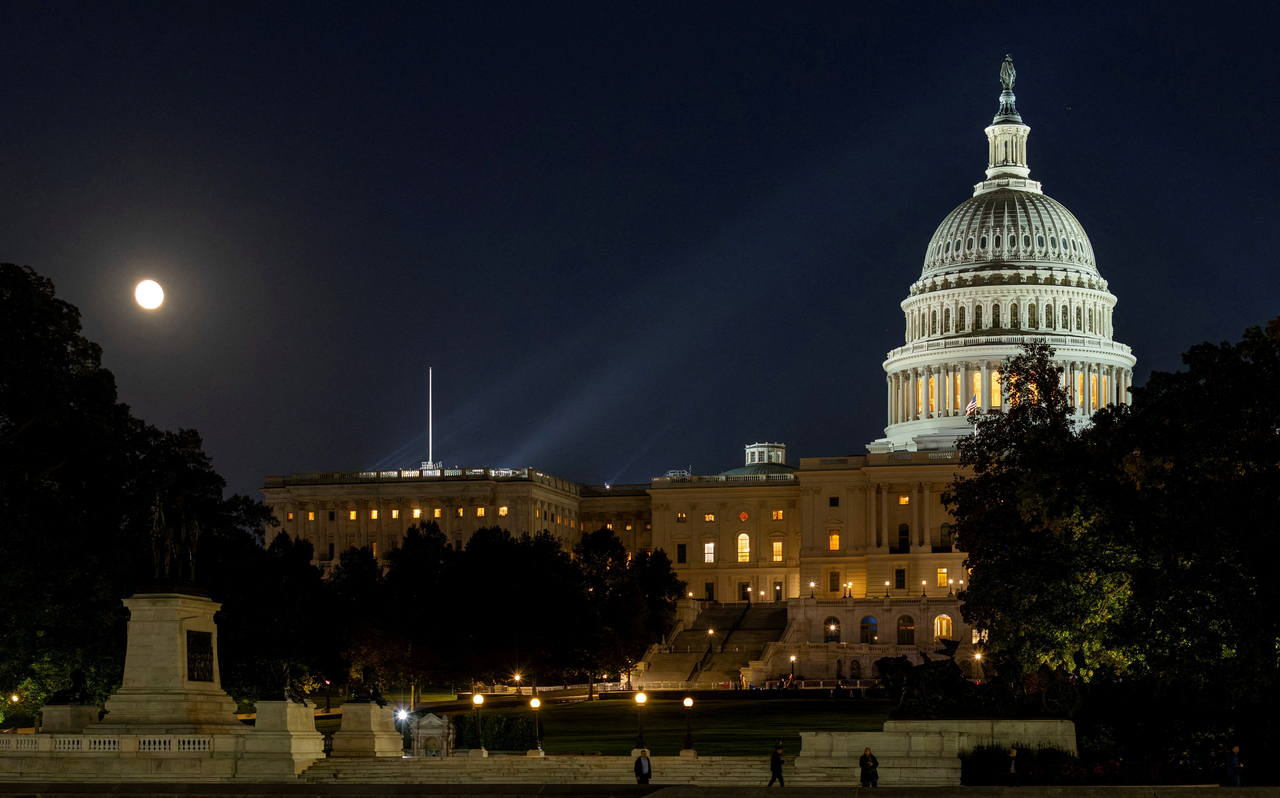
Repeated difficulties for ruling Democratic Party of Korea lawmakers in obtaining US visas are sparking debate over the state of the Seoul-Washington alliance, and questions over US immigration's treatment of South Korean politicians carrying out official duties.
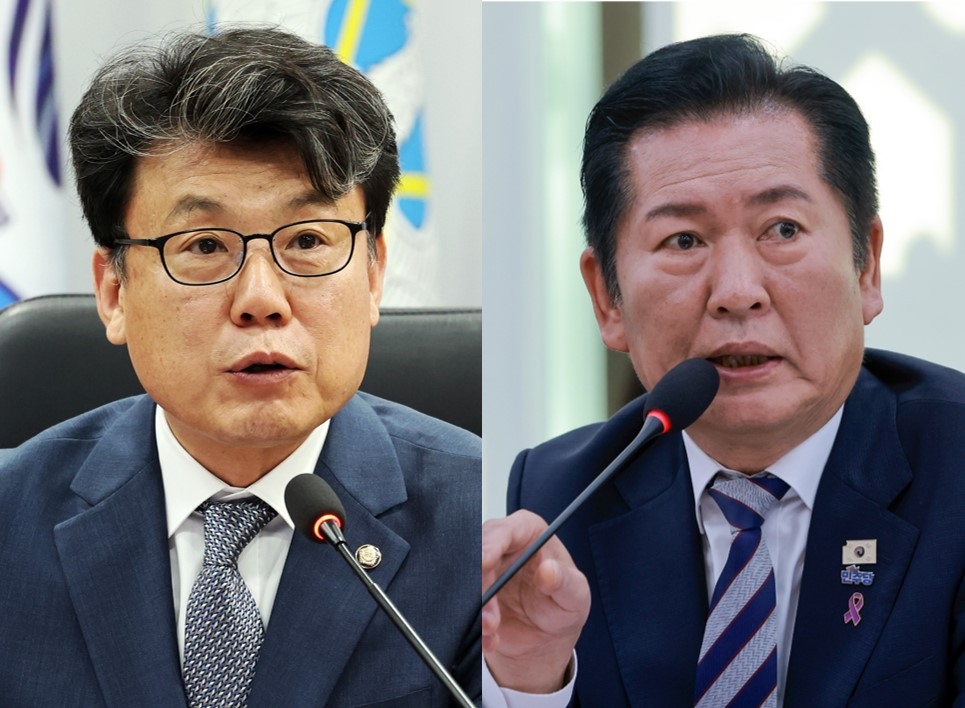
Rep. Jin Sung-joon, chair of the parliamentary National Defense Committee, revealed Wednesday that his US visa application has been put on hold. Jin is the second Democratic Party lawmaker to experience such an issue recently, following Rep. Jung Chung-rae.
Jin had applied for a US visa for his scheduled visit to the US Pacific Command in Hawaii as the parliamentary committee chair next week from Sunday to Nov. 5.
The issue experienced by Jung, a former Democratic Party chair, was made public earlier in October, when he was due to attend an audit of South Korea's Embassy to the US as a member of the Foreign Affairs and Unification Committee.
Foreign Minister Cho Hyun on Thursday called the developments "an undesirable situation," but downplayed any connection with Seoul-Washington relations.
"I intend to request that the US expedite the issuance of visas for our lawmakers because this is an undesirable situation, and this matter is not related to Korea-US relations," Cho said before his flight to the US to attend the Group of 20 members' ministerial-level meeting that starts Friday.
However, conservative politicians have said that these visa failures show that South Korea-US relations are in a precarious state.
People Power Party Rep. Shin Dong-uk on Thursday honed in on the developments, saying that Seoul "must recognize that (the visa failures) reflect the current state of bilateral relations."
Shin cited government data showing a 24.73 percent denial rate for B-1 and B-2 visas for South Koreans who intended to travel to the US from October 2024 to September 2025.
The US "often uses this method to indirectly express its grievances toward an ally," he said.
People Power Party senior spokesperson Rep. Park Choong-kwon echoed the sentiment.
"The fact that they are not being issued now (unlike in the past, when such visas were never denied) forces us to ask, how far off have South Korea-US diplomatic relations gone? This is a valid point to raise," Park said in an interview with CBS on Thursday.
Independent conservative lawmaker Han Dong-hoon said on Facebook on Wednesday that South Korea must confront the crisis in its relations with its longtime ally.
"Pretending that nothing is wrong, like an ostrich burying its head in the sand, and concealing the facts from the public will not solve the problem," Han wrote. "Solving a problem begins with facing reality. South Korea-US relations are currently in a state of grave crisis."
Shin and Park said they suspected the lawmakers' visa issues were related to their past anti-US activities.
According to Shin and Park, former Democratic Party chair Jung was sentenced for occupying the US ambassador's residence and threatening an arson attack there as a student activist, while Jin was found guilty of organizing a private activist group during his time in the South Korean military to engage in anti-US activities.
Park also pointed to "suspicions from Europe that South Korea is leaning toward Russia" at the expense of its ties with Ukraine by partially withdrawing staff from its embassy in Ukraine. He did not elaborate on what suspicions were exactly raised from Europe.
However, a Democratic Party lawmaker said it is undesirable to politicize the matter.
"Giving too much significance to the day-to-day handling of visa-related matters by US consular officers is not good for the South Korea-US relationship, and it does not serve the national interest," Rep. Hong Kee-won of the Democratic Party wrote on his Facebook Thursday. Instead, he suggested Seoul raise a complaint with Washington over the issue.
consnow@heraldcorp.com